Posts By Andre Fisher

Only 9% of Small Business Owners Expect to Cut Staff Due to Automation

The new National Small Business Association (NSBA) and ZipRecruiter Report reveals only nine percent of small business owners expect to cut staff due to automation. More significantly, 24 percent said they would need more employees, while the majority, or 67 percent, said they would need the same number of workers.
Impact of Automation on Small Business Employment
The NSBA and ZipRecruiter Report provides comprehensive data on the state of small businesses. It covers demographics, sentiment, economic outlook, hiring, financing, technology, policies and much more. Members and nonmembers of NSBA totaling 1,633 small business owners participated in an online survey from Dec. 18, 2017 – Jan. 8, 2018 across all industries and states in the US.
Small businesses are experiencing record high numbers in different metrics, while at the same time showing optimism about the future. More than half, or 53 percent, reported higher revenues, and 84 percent said they are confident in the future of their business.

The report says there are decade highs in small business outlook, and small businesses continue to provide great opportunities for the labor force. Cathy Barrera, chief economist at online employment marketplace ZipRecruiter, which partnered with NSBA for the report, said in the press release, “We tend to think of corporate America when we think of career ladders, however, small businesses have ample opportunities for career growth.”
As to the impact of the gig economy, it hasn’t affected the number of full-time jobs that much, but part-time employment has increased in the past five years. Thirty-seven percent said they have increased the number of part-time employees, while only 17 percent decreased their full-time workers to part-time.
Automation, Employment and Wages
One of the biggest drivers for implementing automation solutions is customer expectation moving forward. A Pew Research Center survey revealed 65 percent of Americans expect more automation in businesses. Having this technology in place will make small businesses more efficient and productive, with or without more employees.
This will greatly depend on many factors, including industry and location, but wages will play a more important role in acquiring the right talent. The low employment rate, which is currently at 4.1 percent, has increased the level of competition in wages.
In the report, 58 percent said they have increased the wages of their employees in the last year. And another 64 percent expect to do the same in the coming year.
When asked, “How do you expect your average per-employee wages to increase over the next 12 months?” Twenty-one percent said 1 to 2 percent, 25 percent said 3 to 4 percent, and 11 percent indicated an increase of 5 to 6 percent. However, 35 percent said there wouldn’t be an increase and 2 percent said some or all of their employees will see a decrease.
The outlook in the National Small Business Association (NSBA) and ZipRecruiter Report is overall positive, but challenges remain.
Images: NSBA
This article, “Only 9% of Small Business Owners Expect to Cut Staff Due to Automation” was first published on Small Business Trends


Small Business Resources I have Used to Get Started
Small Business Resources I have Used to Get Started
In this video I talk about resources I used to start my company!
Instagram: https://www.instagram.com/big_cactus_textiles/
Resources shown in the video:
Dave Ramsey Financial Peace University: https://www.daveramsey.com/fpu
Burton Malkiel A Random Walk Down Wall Streest: https://www.amazon.com/Random-Walk-down-Wall-Street/dp/0393352242/ref=sr_1_1?ie=UTF8&qid=1502391537&sr=8-1&keywords=a+random+walk+down+wall+street
Terry Felke – Morris: Web Development and Design Foundations with HTML5, https://www.amazon.com/Web-Development-Design-Foundations-HTML5/dp/0134322754/ref=sr_1_12?s=books&ie=UTF8&qid=1502391589&sr=1-12&keywords=html5
Christy Wright Business Boutique: https://www.daveramsey.com/store/books/business-boutique-by-christy-wright/prodD0190.html
Business Handbook: https://businessintexas.com/sites/default/files/07/24/17/smallbusinesshandbook.pdf
The 1-Page Marketing Plan: https://www.amazon.com/1-Page-Marketing-Plan-Customers-Money/dp/1941142990/ref=sr_1_1?ie=UTF8&qid=1502391884&sr=8-1&keywords=1+page+marketing+plan
Here is a Facebook Small Business Support Group I created:
https://www.facebook.com/groups/259065357930673/

Small Businesses in Dallas and Waco, Texas Will See New AT&T Mobile 5G This Year

This is the year 12 lucky cities in the US will experience standards-based mobile 5G from AT&T (NYSE: T), making it the first carrier in the country to do so.
AT&T 5G Rollout Cities
The announcement comes just two months after AT&T carried out its first fixed wireless trial at Magnolia Market at the Silos in Waco. And not surprisingly, Waco is one of the 12 cities which will take part in the deployment by the end of 2018. Parts of Atlanta and Dallas along with Waco will be the first three cities for the deployment.
Small businesses, such as Magnolia Market, will benefit greatly from the fast speeds, low latency and capabilities requiring the persistent internet connection of 5G. The technology is going to allow owners to increase their digital capability and presence by deploying more services and interactive rich media content.
Standard-Based 5G
The standard-based 5G identification is meant to distinguish services such as AT&T’s own “5G Evolution” and others like it from other carriers which are not true 5G. The new deployments will be based on 3GPP standards and operate over mmWave spectrum.
Igal Elbaz, senior vice president of Wireless Network Architecture, and Design, said in a press release, “After significantly contributing to the first phase of 5G standards, conducting multi-city trials, and literally transforming our network for the future, we’re planning to be the first carrier to deliver standards-based mobile 5G — and do it much sooner than most people thought possible.”
Hitting Peak Speeds and Devices
The theoretical peak speeds of 5G approach multiple gigabits per second, and AT&T says it expects to reach those speeds and the lower latency rates the technology offers as the network grows. But in order to experience these capabilities, new smartphones have to hit the market.
The announcement from AT&T comes before the availability of consumer 5G devices. The Verge has reported Qualcomm is working with phone companies and carriers to release 5G devices in 2019. This, of course, doesn’t match AT&T’s timeline for the trials, so both sides will have to coordinate their launch with more thought.
Image: AT&T
This article, “Small Businesses in Dallas and Waco, Texas Will See New AT&T Mobile 5G This Year” was first published on Small Business Trends

Experience your Very Own LG Gram, the Whole New Compact Practicality between your Fingertips for Free by Entering #likegram Event

– Lightweight, dual channel memory, quad core CPU, ThunderboltTM 3, powerful battery, and MIL-STD-810G approved durability in just your pouch
– Participate in the #likegram event to have yourself your very own New LG gram!
No matter the type of person you are, as a businessman — or woman — you have a morning routine getting ready for work. With only minutes left, your routine becomes a scramble as you frantically untangle and shove power chords, genders necessary to keep your laptop going for the full work day in your now bulky bag. During the process, you may find yourself muttering something about having sacrificed everything for the weight you initially tried to rid of.
But what are you to do? You just get on the train, shrug off the frustration of the morning haste and pull out your computer to get a head start to the workday. While working, you can’t help but become steadily nervous about the receding bar of the battery icon as you run several heavy-weight programs already slowing your workstation down because everybody knows – the lighter the laptop, the lighter the performance, and short lived. You scan around for an outlet you know isn’t there, the laptop continues lagging, and your bag is heavy, weighed down by yet another set of accessories with more design purpose than its functionality.

This morning commute becomes a one sentence description with the New LG gram Z980 — the ultra slim laptop with much awaited combination of more of better things that doesn’t ask you to compromise performance for portability and vice versa.
So exactly what aren’t we sacrificing because of the thin and lightness from now on?
First, Speed. The 8th generation Core i7-8550U and 16GB RAM makes the leap – by 40% to be exact — compared to dual core. Simply put, your laptop will take less than 10 seconds to boot. On top of its brain power, data tunnel size matters. ThunderboltTM 3, evolutionary port capable of transferring data 8 times faster than USB 3.0, and DDR4 also adds more speed to your workflow. For perspective, picture transferring data up to 40Gbps while connect two 4K displays/one 5K display while charging and powering another device – all possible with a single ThunderboltTM 3 connection. As for DDR4, it is a whole 50% faster than DDR3, doubles the memory bandwidth while maintaining its slim design, and adds 8GB of additional memory on top of its basic 8GB. In short? It’s faster than fast.


All of its speed and performance could be overshadowed if users have to rely mostly on the laptop adaptor. Slim laptop by design fell victim of underwhelming battery power due to its physical limitation. LG made a breakthrough not just increasing its battery power by 20% from its 60Wh predecessor to 72Wh (making it top of its slim laptop class) but also the charging speed. Imagine using heavy applications for hours and being pleasantly surprised to find it still has plenty of battery power left, and it only took three hours to fully charge it to last 22.5 hours(when tested on 13” LG gram Z980). So with just two fingers you can carry your laptop around all day minus everything else.

Just from the looks alone, the New LG gram takes a generous nod toward portability within its weight, lifespan, and large display.
“Laptop” defeats its original purpose if it is not light. And light is not light if you end up carrying extra weight to support the light laptop in reality. Think about the recent hip and slim laptops that people ‘like’ to carry in a nice pouch. Sure, they do carry the laptop in such pouches, but they also make sure the adaptor, extra external battery, genders are also along for the ride in their shoulder bag or backpack.
Enter the New LG gram Z980 featuring an ultra-slim bezel surrounding the IPS screen allowing more visibility in a more compact form contributing to the dazzling picture quality in exquisite manner with minimal distraction. With this, the laptop’s specifications are of a 13 inch display, total weight of 2.1 pounds, and thickness of a mere 1.6cm. In other words – the pouch, only the pouch, and nothing but the pouch.
The last but most important question: how tough is it against daily bumps on the road?
Whilst thinner and lighter generally goes hand in hand with fragility, Nano carbon fiber protected LG gram is practically a shield against an array of attacks from nature and your daily routine.
This laptop, light and thinenough to be held with just two fingers, passed the seven categories of the Military Standard (MIL-STD-810G) test with ease. The MIL-STD-810G is a barometer of sturdiness of any items that would be used by US military forces. The New LG gram Z980 is set to survive all conditions of pressure impact, exposure to high and low temperature, salt fog, sand and dust exposure, low pressure, gunfire vibration, and random vibration. So no more wear and tear by train rattle, rush hour battle, other unexpected conditions you may encounter.

Going through your entire day with nothing but your laptop does not have to feel like navigating through an uncharted land of if’s and can’ts. With LG gram — powerful, slim, and sturdy — leave for your meetings without constantly checking off your mental checklist — you’re not going to need that anymore.
Intrigued? Jump at the chance of winning the New LG gram Z980 for free by checking out our video and participating in the #likegram event across social media.
Photos via LG Global
This article, “Experience your Very Own LG Gram, the Whole New Compact Practicality between your Fingertips for Free by Entering #likegram Event” was first published on Small Business Trends

Small Toy Companies Thrive While Toys R Us Announces Store Closings

Toys ‘R’ Us is slated to close 180 stores across the US as the 115th North American International Toy Fair gets underway in NYC. But the market is rewarding nimble small businesses creating new toys faster than large established corporations.
Fox Business reports Toys ‘R’ Us hopes to restructure and recover after the company filed for bankruptcy. The 180 stores it is closing represent around one-fifth of its locations, but it is not affecting the US toy industry as expected. The $27 billion US market has slowed down, growing at only 1 percent in 2017, but the slowdown is attributed to the ebb and flow of the toy industry as products become hits or flops.
For small companies, the market provides great opportunities. At the fair, small toy companies told Fox Business it is all about having the right product, delivering it to market faster, and smart marketing.
Shay Chen, CEO and founder of Flycatcher Inc. told FOX Business, “For a startup in the toy industry, the hardest thing will be getting to the market so you need a good sales group and obviously you need a good toy.”
More than 1,000 toy companies from over 100 countries are attending the toy fair, and many of them are small companies looking to come up with the next big hit. And this requires spotting trends on social media and collapsing production times, according to the Wall Street Journal (WSJ).
Small Toy Companies Can Compete by Being Nimble
If small toy companies want to compete, they have to be very flexible and identify trends quickly to capitalize on them. This means fast turnaround times before copycats flood the market with imitations of your hit toy.
The Wall Street Journal explains toy companies are copying the production model of fast-fashion retailers who introduce new items in as little as 25 days. And this is where small companies can compete because they move much faster than their larger counterparts. However, Hasbro, Mattel, and others have also implemented this model within their companies with divisions designed to operate just like small companies delivering quick turnaround times.
But, as Chen said, at the end of the day, creating a hit toy is the best way to beat your competition.
Image: The Toy Association
This article, “Small Toy Companies Thrive While Toys R Us Announces Store Closings” was first published on Small Business Trends

7 Reasons Starting a Small Business is Crazy – Seriously!

I think people who start companies are, without a doubt, just a little bit crazy.
Myself included.
And people who start more than one company? Deranged lunatics – all of them!
Why? Because it’s insanely hard!
You’re signing up for a ridiculous amount of work.
But I also think you have to be crazy to start a company.
Your startup journey will be the wildest ride of your life.
Why People Who Start Companies Are Crazy
Here are seven reasons why.
1. It Takes A Ridiculous Amount of Work!
Many people who are seriously thinking about starting a company are usually thinking about the end.
You know, when you sell your company for millions or billions of dollars and money rains from the heavens.
Here’s the reality about being an entrepreneur:
It takes a ridiculous amount of work before you get anywhere close to that dream scenario.
Starting your own company means sacrificing your own time to build your company. It’s a full-time commitment. Expect many long days and long nights.
2. You Must ‘Dream While Awake’
Statistically, the odds of success aren’t in your favor.
You might fail.
Only 25 percent of venture-backed startups succeed.
Despite the awful odds, you unwaveringly believe in success. There’s huge power in delusional thinking!
The first company I founded? It almost failed. Twice.
Thankfully, that company survived. It eventually became profitable and continues to thrive today.
To survive, you need to be able to project an unbelievably (albeit unrealistic) great future.
Craziness is required to project that ridiculously bold vision and the enthusiasm to match.
This is what enables you to attract the team and investors you’ll need to make your delusion a reality.
3. Raising Money for Your Startup Is Challenging
I pitched more than 100 VC firms for the first company I founded. I got a dozen meetings.
The end result? Rejection.
It almost took me two years to raise a Series A round.
It’s remarkably hard to connect with top-tier investors.
Even when you do get a meeting, you’re going to run into some skeptical VCs.
4. Hiring Is Difficult
Unless you have a proven track record in the startup world, it can be incredibly hard to lure talented people to work for you.
Why would someone risk leaving a steady good job to believe in your crazy idea?
However, you should never settle because there’s a lack of available talent. You need to hire the best person for the job – someone who will help grow your business.
Here are three questions you should ask to weed out the good candidates from the bad:
- Tell me about your best achievement and why it was so great.
- How do you decide what to do next?
- How do you know what you did paid off?
5. Being Boss Sounds Great, But…
So you think you’ll be your own boss?
You’ll quickly discover that, although you’re “the boss,” you really aren’t in control of your company.
If you have investors, you’ll quickly discover they’re more demanding that any boss you ever had.
And let’s not forget about your customers. Think they aren’t really in charge? Think again! They’re probably more demanding that any of your old bosses or your investors!
Being the boss isn’t glamorous. You’ll probably actually lose freedom and have more responsibility than you ever could have imagined.
6. Pivoting Almost Never Works
If things go south, your company can always pivot and everything will be OK, right?
Well, here’s the thing. Pivots almost never work.
Although pivots have been made to sound cool, really it’s just a way of saying, “Oops, my vision didn’t match reality.”
Your investors and employees will lose confidence in your leadership. People will either start tuning you our or quit.
There’s little margin for error when you start your own company.
7. You’ll Do Less of What You Love
Being the founder means doing less of what you love.
For example, if you love coding, don’t expect to do much (if any) when you’re the boss.
You have to hire people who are better than you at what you love to do those things. Then you have to nurture and lead that team.
You have an entire company to run. That means inevitably sacrificing working on those things you’re most passionate about.
Here’s to the Crazy Ones
Yes, we may all be crazy. As an old Apple ad reminds us, we should celebrate being one of the crazy ones:
“Here’s to the crazy ones. The misfits. The rebels. The troublemakers. The round pegs in the square holes. The ones who see things differently. They’re not fond of rules. And they have no respect for the status quo. You can quote them, disagree with them, glorify or vilify them. About the only thing you can’t do is ignore them. Because they change things. They push the human race forward. And while some may see them as the crazy ones, we see genius. Because the people who are crazy enough to think they can change the world, are the ones who do.”
We aren’t just crazy. We’re courageous. We’re dreamers.
We’re willing to risk money, failure, and our reputation.
We’re willing to feel uncomfortable all the time.
Would you rather have it any other way?
If your answer to that one question after reading this article is “no,” then congrats! You’re crazy! It’s time for you to go start your company!
Republished by permission. Original here.
Photo via Shutterstock
This article, “7 Reasons Starting a Small Business is Crazy – Seriously!” was first published on Small Business Trends

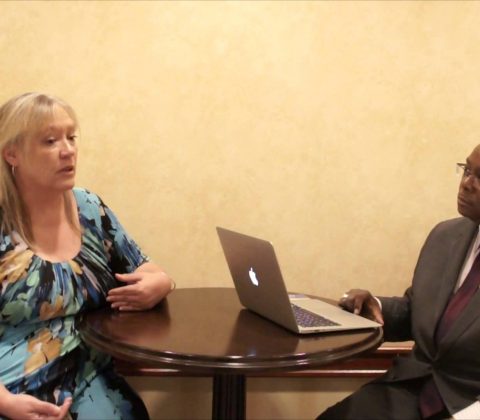
How to Win the Human Resources Game for Entrepreneurs and Small Business Part ll
How to Win the Human Resources Game for Entrepreneurs and Small Business Part ll
Visit us at http://www.myvec.org/
To keep up with the Virtual Entrepreneurship Center follow us on twitter @myvec.org.
Like us on Facebook / https://www.facebook.com/myvecorg
The Virtual Entrepreneurship Center (VEC) incorporates the expertise and experience of Alabama A&M University (AAMU), Auburn University (AU), and Tuskegee University (TU) to promote entrepreneurship and business development. The center utilizes the economic development experience of each land grant institution in the state to more effectively reach rural, nontraditional audiences, and underserved populations. The center integrates conferences, youth entrepreneurship training, myvec.org, and social media to provide training to the public. This approach provides individuals regardless of age or location the opportunity to develop their entrepreneurial skills. The center brings to bear the total capacity of Alabama’s land grant institutions to address the need for greater entrepreneurship training throughout the state and especially among the youth, rural, and minority population.

The Hidden Mystery Behind Building Trust with Potential Customers

We don’t buy products, services or companies. Well, we do, but we buy them from people we trust. We all operate in competitive industries. Our prospects can find what we sell just about anywhere. So, how do they decide who they buy it from? They buy from the person they trust. Therefore, people buy from people – first.
Importance of Building Trust With Customers
Knowing this, we have to be sure we are conducting ourselves in a way that is trust building. The number one way to build trust is to care more about the prospect than about ourselves. And yet, one of the hardest things to do is to NOT think about the sale.
So, what do we do? Start by embracing the idea that the more you think about selling, the less you will actually sell. You will be working against yourself and your best interest. If you can own this truth you are on your way to gaining trust and growing your business.
Now, focus on your prospect. The more you learn about them the more you will be able to identify if, and how, you can help them. The truth is this is all they are interested in. They don’t care about your product or service. They care about the problems they have, the challenges they are facing, and their own success. If you can connect your product/service to their situation, you are far more likely to gain their business.
You can’t assume you have a solution for them. That’s one of the traps of sales — believing your offering is valuable to everyone. Maybe it should be, but it isn’t. It’s only valuable to the people or companies who see value in it. And the only ones who are going to find it valuable are the ones that trust you to provide the solution.
Consider these three steps to being the person your prospect will buy from:
- Assume nothing — Realize that you don’t know whether you have something they should buy until you know more about them. You also don’t know if you want to do business with them until you know them. Just because they look like they fit a mold doesn’t mean there’s a fit.
- Do discovery — Develop a comprehensive list of questions you can ask them to really learn about them. These questions should go beyond the scope of the situation you can resolve. You want to know how they operate, what is most important to them, their budget and timeline, and more.
- Really listen — This is critical. Attentive, intentional listening is the most important part of trust building. When you are really listening to someone they can feel it. And you can honestly determine whether you can help them, and whether you want to. This real listening provides you with the platform for responding to them.
When you implement these steps you will find that you are developing deep relationships where you should be. You will build trust that will positively impact your business over time. And the people or companies that should be buying from you, will.
They will want to enter into a business relationship with you, and they will refer you to others. Because people buy from people. Period.
Photo via Shutterstock
This article, “The Hidden Mystery Behind Building Trust with Potential Customers” was first published on Small Business Trends

48% Who Want to Sell Have No Exit Strategy

Having an exit strategy when you start a business makes it that much easier to execute rational and informed decisions when you want to get out. But the UBS (NYSE: UBS) Q1 Investor Watch Report, “Who’s the boss?” reveals 48 percent of business owners don’t have a formal exit strategy.
This is the 22-second edition of the quarterly survey, and this time around it is looking at how investors feel about business ownership. The survey also explores the exit strategy of business owners, including selling their company and leaving it to their heirs.
In the report, UBS points out the majority of business owners don’t have a full understanding of what takes place in the selling of a business. It identifies a knowledge gap for the 75 percent of owners who believe they can sell their business in a year or less. This is on top of the 58 percent who have never had their business formally appraised, and the 48 percent without exit strategies.
Stewart Kesmodel, Head of Global Family Office, Americas for UBS Global Wealth Management, explained the challenge of selling a business this way in the press release. He said, “Selling a business successfully requires a great deal of planning, which owners often underestimate. Before pursuing a sale, it is important for business owners to not only have a view on the value of their business to potential buyers, but also an understanding of how that price applies to their personal needs post-transaction.”
In the survey, 1,085 of the 2,245 high net worth investor were identified as business owners (770 current/315 former). Their business had at least one employee and $250k in annual revenue.
Key Business Exit Strategy Findings
Selling the business is the preferred strategy of 52 percent of the respondents, which 41 percent plan to do within five years. Another 20 percent said they plan to leave it to family, 18 percent are going to close the business, and 10 percent don’t know.
As to the reason for leaving the business, 65 percent said it was a good time to sell and they are ready to retire, while 49 percent indicated they are looking to find a work-life balance.
So how do the heirs feel about inheriting a business?
More than 4 in 5 or 82 percent rather have the money from the sale of the business, and only 18 percent said they wanted the business. This is probably why 89 percent of owners said they won’t pass their business on because family members are not interested. Lack of qualification and wanting a family member to take another career path was sated by 21 and 9 percent of the respondents respectively.

Takeaway from the UBS Survey
Plan early with different exit strategies in mind. This will allow you the flexibility you need to get the most out of your business, whether you sell it, pass it on to your family, or have someone else manage it for you.
You can take a look at the rest of the data here and the partial infographic below.

Images: UBS
This article, “48% Who Want to Sell Have No Exit Strategy” was first published on Small Business Trends

5 Ways Tax Reform is Helping Franchise Businesses

The recent passage of the Tax Cuts and Jobs Act could have a major impact on franchise businesses. The tax reform will likely lead to changes ranging from increased deductions to a more financially stable customer base.
Ways Tax Reform Is Helping Franchises
Here are a few of the specific ways this new legislation could help franchises.
Increased Cash Flow
Because of the lower corporate tax rates and larger deductions for pass-through business structures, the new tax bill is expected to help businesses of all sizes save money on tax payments. According to President of Franchise Marketing Systems Christopher Conner, who has worked with franchise businesses ranging from Blimpie to UPS, this increase in cash flow and the ability to keep and reinvest that money into growth opportunities is the number one potential benefit of the new bill.
He said in an email to Small Business Trends, “Franchisors and Franchisees now have more cash flow and capital to put towards hiring, growth and investment into the people who support their business’ operations.”
Ability to Invest in Employees
Because of that potential increase in funds, franchise businesses should have more money available to hire new employees, invest in training and provide more competitive wages for existing employees to keep them happy. This can help you retain those team members for longer, decreasing turnover costs and strengthening your company culture, things that can have long-term benefits for your business.
Better Options for Structuring Your Business
One of the tax reform changes that’s most pertinent to the small business community is the new 20 percent deduction for pass-through entities. This is any type of business where the income passes through to the owner’s individual tax returns, including sole proprietorships, partnerships and S-Corps. For some franchise businesses, this could offer some opportunity to reap even more financial benefits by adjusting the structure of the business, though the actual impact will vary for each individual business.
Conner says, “We always recommend speaking to a CPA, but it has been recommended by several to transition your business to an S-Corp. The new tax regulations offer a larger degree of benefits to corporations than other business entity structures.”
More Write-Off Opportunities
Owning a franchise business requires some investment in equipment and supplies, some of which you can write off as deductions on your tax returns. And the new bill raises the limit on how much of those expenses you can deduct, potentially making it more financially beneficial for you to grow your business by making those investments.
Conner says, “The write off for capital investments has increased substantially where businesses are incentivized to now invest in equipment, real estate and other capital investments where with the new tax reform, business owners can write off up to $1 million in asset investments in the first year of ownership which is incredible and extremely advantageous for business owners.”
Potential for Economic Growth
Of course, the most general goal of tax reform is to support a healthy economy. Since many franchise businesses, like fast casual restaurants and automotive service providers, tend to target middle class consumers, a tax bill that puts more money in the pockets of those customers is likely to be a benefit for franchise owners as well.
The new tax bill adjusts the some of the tax rates for middle class families, lowering rates by a few percentage points in many cases. There’s also a larger standard deduction and child tax credit that could lead to more deductions for average families. These benefits might not have direct applications to franchise businesses right away. But over time if they have the desired effects on the economy as a whole, it could lead to a customer base with more money to spend.
Photo via Shutterstock
This article, “5 Ways Tax Reform is Helping Franchise Businesses” was first published on Small Business Trends
Recent Comments