
Apply These 4 Secret Techniques to Turn Your Blog Visitors into Customers

To blog or not to blog? I get this question from our eCommerce clients all the time. Many of them have tried blogging, but are discouraged because “it hasn’t worked for them.” They publish several articles per week or per month and give up when they don’t see the sales coming in right way.
One of the many reasons why they don’t see results is because of low website traffic. Unfortunately, if a website has low traffic, blogging won’t increase that traffic overnight. To have articles or blogs rank organically, it takes months and requires the execution of several search engine optimization practices.
However, many of those clients do have website traffic but still have no eCommerce conversions … so, what’s going on in those cases? I’ve found that most experience poor results because they don’t optimize their articles for conversions and don’t implement other efforts to stay in front of their readers. As you’ll see in the tips below, the key is to think of content as the initial point of contact, or an introduction. Once you grab the attention of your readers, you can then nurture them until they convert into paying customers.
How to Turn Blog Visitors into Customers
1. Create Relevant Content
No matter how much content you produce, if it doesn’t speak to your ideal target customer, you’ll be wasting your time engaging the wrong type of readers. Thus, take time to develop a content calendar that speaks to your audience and addresses their specific interests or concerns.
Think of your content as a helping guide for your ideal customers in different stages of the buying cycle: awareness, consideration and purchase. For instance, let’s say you have an eCommerce store that sells boating shoes and you’re trying to get new customers that are in two different stages of the buying process: awareness and consideration.
As you can imagine, the content produced for ideal customers in the awareness stage will be totally different from the content generated for ideal customers in the consideration stage. The ones in the awareness stage are not familiar with your brand, so they’ll need a “softer” introduction to your products.
For example, you can create a fashion guide about how to pair boating shoes with clothing. In that guide, you can introduce your shoe brand to users who were just looking to learn fashion tips online and were not specifically searching for your shoe brand.
On the other hand, the content targeting ideal customers in the consideration stage can be more focused on your brand and benefits because this target already knows your brand. For example, that can be the case of a user who already joined your newsletter but hasn’t made a purchase yet. If so, that user can get an article like this one:

In such articles, you’ll want to emphasize things like your unique value proposition, company story, and/or testimonials. In other words, convince users that your store is better than your competitor’s.
2. Capture Your Readers’ Email Address
This tip is essential to make other key efforts work successfully. The idea is to capture your reader’s information while they are reading your blogs, so you can build your email list, retarget those contacts on other platforms, and email them to convert them into paying customers.
One of the best ways to do this is by using email lightboxes. They are pop-ups that capture email information, usually by providing an incentive such as a discount offer. See below how Banana Republic encourages visitors to join its newsletter using pop-ups:
They may seem like a small addition to your website, but I’ve seen a great increase in email subscriptions thanks to this little tool. And the more targeted you can make it to the user, the better. You can customize them with many online tools or apps that will allow you to take care of the whole design and customization process.
Sumo is one of those tools, and it will allow you to get super targeted with your pop-ups. For instance, you can use this tool to customize your pop-up copy based on specific URLs. So, you would be able to show different messages according to the website your reader is on.
Let’s say your visitor is reading about how to choose the perfect engagement ring. Then you can show a message that says something like: “Looking for the perfect ring? We’ll help you decide. Add your email below.” This message would be very different from the one another visitor can get reading about necklaces. Targeted messages like those will increase your conversion rate.
3. Retarget Your Readers on Social Media
Not all your blog visitors will be ready to make a purchase at a moment they read one of your articles, and that’s okay. As long as you remind them about your brand and products, they will come back to your store if they are interested. The low conversions arise when you don’t stay in front of those blog readers, and they end up forgetting about your brand in the long run.
In other words, what you need to do is remarketing. There are many platforms that can be used for remarketing, but, in this tip, we’ll talk about social media.
There are two ways you can retarget your previous blog readers using social media:
- Using their email addresses
- Based on your website’s tracking pixel
The first option, using an email list, will help you retarget the users that subscribed to your newsletters while reading one of your blogs. This segment will be “warmer” than the “all visitors” segment because they decided to engage with your brand.
To retarget an email list, you’ll have to create a custom audience on Facebook. Just go to “Audiences” located in the drop-down menu of your Ads Manager, and select the first option: Customer File.

Then you’ll have the option to import your contacts directly from Mailchimp or upload a CSV file. Choose whichever option works best for you.

If you choose the CSV option, you’ll see a popup like the one below:

Just upload your file, follow the instructions and you’ll be able to create a new custom audience for your remarketing ads.
Another option available is to target previous blog readers based on your Facebook Pixel. To do this, just go back to the Audiences tab, but this time select the second option: Website Traffic.

On the next screen, select “People who visited specific web pages” to only target people who have visited your blog. Then, to “URL contains” add “blog.” This will work if you use the word “blog” for all your article URLs. If you’d like to target specific blogs, add the content there.

Once your custom audience is populated by Facebook, you’ll be able to use it in your campaigns.
4. Set Up an Email Drip Campaign
At this point, you have a strategy set up for email capture and retargeting; now it’s time to nurture your leads. You can do this with an email drip campaign. Don’t get scared by that term. They are just email campaigns set up with automated rules, optimized for conversions.
For instance, you can set up an email drip campaign for anyone who signs up for your newsletters so they automatically get a welcome email. According to the recipient’s behavior (opens it vs. doesn’t open it), you will then set up another email accordingly. So, if a user opens it, you can send another piece of content to keep nurturing that lead, and so on.
Email drip campaigns increase conversions because they are automatic (you don’t have to follow up manually) which reduces human error — and they are sent in a timely manner. The users will get the emails you’ve set up as soon as they fulfill any rules in the drip campaign.
Conclusion
Armed with these tips, it’s time to start turning those blog visitors into lifelong customers of your brand. What other tricks or tactics have you used in the past that have worked in this instance? I’d love to discuss new ideas in the comments below.
Photo via Shutterstock
This article, “Apply These 4 Secret Techniques to Turn Your Blog Visitors into Customers” was first published on Small Business Trends

20% of All Searches are Made with Voice (INFOGRAPHIC)

A new and very interactive infographic by Adzooma takes a look at how online advertising will be trending in 2018. And one of the data points is the growth of voice search, which now makes up 20 percent of inquiries on Google’s mobile app and Android devices.
Online Advertising Trends
In addition to the upcoming trends in 2018, the infographic also provides tips to stay abreast of changing technologies, new SEO requirements, and the way we communicate digitally. Adzooma also looks at audience targeting, Google, PPC, images and videos along with voice search.
The reason your small business needs to keep up with the information in this infographic is that online and mobile advertising is taking over traditional advertising around the world. And if you don’t know where your customers are, buying ads in a medium they don’t use will yield a low return on your investment.
The data for the infographic comes from Adzooma, which specializes in Small business online advertising, and from Search Engine Land, Google, and other sources.
Integrating Voice Technology into Your Small Business
Voice search is growing, and according to the data below, it will account for 50 percent of all searches by 2020. So making your website, ads and other digital assets voice friendly is key to ensuring you won’t be left out now and in the near future.

Another benefit of using voice technology is it conveys a more clear intent of what users are searching for. This gives marketers, SEO specialists and your small business a much better way to make your ads and marketing campaigns easier to find.
Location-based optimization or GPS-based SEO is growing along with video ads. And mobile will continue to be the key technology driving online advertising, which now stands at 43 percent of all digital ad spend.
According to Adzooma, the glue holding it all together is still Google. Not only does it deliver around $2 for every cent spent on Google Adwords, but it now has 32.4 percent of mobile spend advertising too.
You can take a look at the interactive infographic below to find out more about audience targeting, PPC and more.
Photo via Shutterstock, Other images: Adzooma
This article, “20% of All Searches are Made with Voice (INFOGRAPHIC)” was first published on Small Business Trends

How to Use Blockchain and Big Data for Better Small Business Profits

In this age of the Internet of Things, the need for businesses to make data driven decisions has become critical. The amount of consumer data available for analysis continues to grow exponentially, creating more opportunities for businesses to tap into it.
Effective use of big data means better decision making and hence business profitability and growth. According to a report by EY, the robust growth in big data is disrupting the way businesses compete and operate. Businesses that are able to derive value from their data are emerging as leaders in their industries while those that do not are finding themselves being pushed to obsolescence.
As Geoffrey Moore, the famous American organizational theorist, author and management consultant puts it, without big data, companies are blind and deaf, wandering out into the web like a deer on a freeway. But is every business utilizing big data today? The answer is no! While most Fortune 500 companies have a big data strategy in place, the majority of small and medium enterprises do not. This is because implementing an effective big data strategy requires specialized skills and expensive software the majority of these businesses cannot afford.
Introducing Big Data Blockchain
However, with the blockchain technology, businesses will now be able to leverage big data analytics without having to worry about cost or complexity. But before we discuss how blockchain is enabling businesses to implement big data strategies effectively and at low costs, let us first look at the relationship between the blockchain technology and big data.
While big data analytics is about deriving insights from large pools of data, blockchain is about enabling fully transparent P2P transactions and also protecting consumers’ data from exploitation by third parties. The blockchain technology involves an immutable public ledger where transactions can automatically be verified and information stored securely hence eliminating the need for intermediaries.
With this in mind, it is logical to conclude blockchain systems provide a rich data source for analytics while ensuring that the presented data is accurate and the users’ sensitive data is protected. According to VentureBeat, the application of the blockchain technology in big data and analytics makes it possible to turn insights and questions into assets. Apart from guaranteeing data security and accuracy, blockchain minimizes costs through the decentralization of data storage.
Small Businesses and Big Data Blockchain
But how does blockchain help small and medium enterprises with limited budgets take advantage of big data and analytics? The answer to this question lies in the decentralization of the process. Blockchain platforms powered by AI and Machine Learning are providing an avenue where businesses can access high-quality data and insights at a low cost and without having to buy complicated software or hire data scientists. Through these platforms, consumers and data providers can securely allow access to their data and in return get rewarded in cryptocurrencies.
Endor, a blockchain platform developed by MIT engineers, is a good example of how AI and blockchain are interacting to improve big data analytics. The platform seeks to become the “Google for predictive analysis” by enabling businesses to ask predictive questions in plain language and get automated accurate predictions. To make this happen, Endor has introduced a new Social Physics Technology, where machines and scientific data can integrate to predict social issues.
Social Physics is a scientific discipline that utilizes large data, data analysis and the mathematics of human psychology and biology to understand human behavior. Consumers who share their data with the Endor platform are paid in EDRs which can be converted into other cryptocurrencies or fiat currencies.
Another up-and-coming blockchain project is also bent on shaping the way small businesses process and utilize big data. Slated to be launched in the MCW 2018, Wibson will let users and consumers sell their data directly to advertisers; creating a system in which small businesses can pinpoint their audiences with surgical precision and target an already engaged userbase.
Instead of a costly “shotgun approach” to advertising, small businesses will be able to figure out the exact niches that need approaching and will be able to rely on their newly acquired user data to direct their marketing efforts.
As the blockchain technology continues to gain acceptance in mainstream institutions, its roles in big data analytics are bound to become more pronounced. This is therefore the best time for small and medium enterprises to start utilizing the available options and for investors to get in the game.
Photo via Shutterstock
This article, “How to Use Blockchain and Big Data for Better Small Business Profits” was first published on Small Business Trends


Need To Know HR for Small Business
Need To Know HR for Small Business
When you first start a business, often small business owners are a one person show and they don’t have to worry about hiring people and managing people. But if you are planning to grow at all, capacity and human resources will immediately become a concern. Be prepared through this overview of the basics.
Find more small business management and human relations webinars from Small Business Solver experts:
How To Do A Quarterly Review: http://youtu.be/W3n-A8Qn7M8
Top Mistakes to Avoid As a Small Business: http://youtu.be/UX9mK6CHAV4
Universal Management Principles: http://youtu.be/NKG74nwdvI8
Top Home Based Businesses: http://youtu.be/8OxfYBt9rp4
Action Planning 2014: http://youtu.be/X48a2QdOGZs
Who To Hire: http://youtu.be/l7Qe0fK-iqY
Benchmarking & Performance Management for Small Businesses:
Preparing For Change: http://youtu.be/YOf7U-u9AA0
Employee Engagement (The Art of Employee Retention): http://youtu.be/ihQWVjm8EgQ
Strategic Planning 2013: http://youtu.be/Fi1CVBpzbvI

13 Key Ways to Stay on Track to Achieve Your Business Goals

As the first quarter starts to come to a close, companies are starting to see whether their plans for the new year work as well in practice as they do during the planning phase. This offers organizations a chance to course correct, adjusting goals and procedures before things become too set.
Clarifying your yearly benchmarks takes some initiative and effort, but is a worthy way to ensure your company follows the correct course. To establish what people are planning to do this year, we asked 13 entrepreneurs in the Young Entrepreneur Council (YEC) the following question:
“What goals and benchmarks are you setting for your business in 2018 and how do you plan on achieving them?”
Your Business Goals: Ways to Stay On Track
Here is what YEC community members had to say:
1. Break Down the Goals and Benchmarks
Breaking down business goals and benchmarks to team level accelerates the progress. The development team knows what they need to do to take the company to the set benchmarks and so does the sales team and all other teams. Also, encouraging employees with instant rewards is something we are planning to do in the coming year. This will keep them motivated and on track to achieve the goals. – Liam Martin, TimeDoctor.com
2. Give Ownership to Your Team
No single person can do it. Show your senior team members how to lead, and show your entire staff how to be passionate about what they do. Allow them to have full ownership of their projects, and give them the freedom to make decisions. Learning to navigate mistakes will make them more efficient with less oversight in the future, and will make them more valuable to your overall vision. – Ali Mahvan, Sharebert
3. Ensure More Flexibility
Setting goals, while absolutely necessary, can be restricting, as well. In 2018, our team’s primary goal is to stay nimble and adaptive. The pace of change across all industries is rapid, and the best operations will work toward traditional goals while at the same time preparing to jump at unforeseen opportunities. – Ryan Bradley, Koester & Bradley, LLP
4. Eliminate Projects and Services That Don’t Sell
All products and services are not going to be best sellers and when something does not sell, it’s easy to get frustrated and give up. To keep myself and my team on track this new year, we’ve decided to eliminate the one product that has not been selling (after trying to market it three different ways to various audiences). It’s time to trash it and move on! – Kristin Marquet, Creative Development Agency, LLC
5. Set and Surpass Reasonable Goals
The most effective strategy I’ve discovered when it comes to setting up New Year’s resolutions is to start with a modest goal and work to surpass it as much as possible. This same approach has served me well in business — I set a goal which will require some work, but is reasonable to accomplish within a quarter or so. From there, I encourage my team to greatly surpass this modest goal. – Bryce Welker, CPA Exam Guy
6. Set a Number-Based Goal
Last quarter, we had each employee set a specific number-based goal. Jessica will drive 1,200 new users a month to our site with Facebook, or Keith will increase our conversion rate at checkout by 1 percent this quarter. The results were amazing when each employee had a tangible goal that they were working to achieve. In 2018, we will take it even further by doing this once per quarter. – Scott Baxter, PlayYourCourse
7. Embrace Controlled Chaos
In 2018, managing our collective psyche and being comfortable being uncomfortable is what’s most important. When there are countless things that we want and need to do, or to continue to improve, it can become difficult to prioritize what gets done and avoid becoming overwhelmed. We need to find calm in the chaos, and we need to embrace and enjoy the process. – Brett Maloley, ladder.fit
8. Reconfirm That the Team Is Sold on Your Vision
I am a big believer in the fact that money should never be the incentive to get someone to perform at their peak level. I always hire people who I know for a fact believe in my vision for the company as strongly as I do. I have noticed, time and time again, when an employee chases money, it always tends to run out. They will always want more of it. You will always have to come up with more of it. – Rafi Chowdury, gannett.com
9. Create KPIs for Employees
One thing that I’m working on is setting up key performance indicators for all of my employees. As our company has grown, we’ve done a good job setting up KPIs for new employees, but now have to circle back with earlier employees to make sure that everyone has measurable goals in the new year. – Syed Balkhi, OptinMonster
10. Create a Culture of Ideation
I’ve noticed that some of our best product features have come from our customers or team members. So my new approach for 2018 is to ask the team for more ideas and accelerate the culture of ideation within the organization. If we can work to execute the best ideas, 2018 will be the best year yet! – Jared Atchison, WPForms
11. Seek Perspectives on the Technical Side
As a company leader, it’s my job to set goals, but I want as much input as possible from my team about the best way to achieve them. We employ people who are experts in a specific technical domain. They’re an incredible resource, so I make sure their voice is heard as we make plans for the coming year. – Justin Blanchard, ServerMania Inc.
12. Focus Our Focus
It’s easy to go into the new year excited and ready to tackle every goal you can imagine. I am going in and reminding my team that the year is not a sprint, but a marathon. We need to be diligent and work steadily-hard to accomplish our goals. I don’t want anyone to burn out. So, although I enjoy the enthusiasm, I am going into 2018 calmly, ready to help focus my teams focus. – Ben Landis, Fanbase
13. Find and Hire Experts
We knew early on that we wanted 2018 to be a strong year for us, both in growth and quality content. In light of that, we sought the expertise of business coaches and hired more people for leadership roles. By making these changes, we have created an opportunity for growth and success in the upcoming year. – Shawn Rubel, Eezy
Photo via Shutterstock
This article, “13 Key Ways to Stay on Track to Achieve Your Business Goals” was first published on Small Business Trends

59 Percent of Online Customers say Chatbots are Slow in Resolving Their Problems

PointSource has released a survey which looks to find common ground between consumers and artificial intelligence (AI), more specifically chatbots. And in the process, the company has found out some of the pet peeves or frustrations people are experiencing with chatbots.
To date, Chatbots have become the most popular AI application. But in the report, PointSource is quick to emphasize the interest in chatbots still hasn’t translated into the full understanding or adoption of the technology. It goes on to say finding out where chatbots are best used or suited will definitely assist businesses in deploying the technology.
For small businesses, it means being able to afford comprehensive 24/7 customer response systems and using chatbots to answer a wide range of queries about their company. And with PointSource reporting 80 percent of consumers are OK shopping with a company using chatbots and other AI capabilities, support doesn’t seem to be a problem for the vast majority of users.
In addressing the challenges, PointSource says in the report, “There are still hurdles to overcome in earning such benefits, but businesses should welcome these challenges as openings to develop experiences that are more valuable and enjoyable for all parties involved. This kind of successful chatbot integration requires a deep understanding of consumers and a degree of organizational rigor to keep evolving. Chatbots may be a technology investment, but they’re a company-wide responsibility.”
What Makes a Chatbot Annoying
The first of the pet peeves is speed. Fifty-nine percent of respondents said they get more frustrated if chatbots they are using don’t offer a clear path to a resolution in five minutes.
The second pet peeve is friction due to chatbots not understanding what they are looking for. Fifty-one percent said this was a problem, which lays groundwork for the next biggest concern.
Problems with accuracy led 44 percent of the respondent to question if the information the chatbots provided was correct.
Besides the top three concerns, other concerns raised by respondents included privacy, personal data security and having an impersonal experience were also concerns.
The Future of Chatbots
The use of chatbots and other AI are important if small businesses are going to communicate effectively with customers. And as the technology improves and the chatbots get smarter (they will by the way) they will eventually coexist with consumers seamlessly.
For small businesses, the adoption of chatbots will deliver faster and more efficient customer service capabilities without the cost of a call center or similar expense. And the frustrations consumers feel can be solved with well-designed chatbots delivering accurate and up to date information.
The PointSource survey was carried out with the participation of 1,008 U.S. consumers online between Oct. 13-21, 2017.
Photo via Shutterstock
This article, “59 Percent of Online Customers say Chatbots are Slow in Resolving Their Problems” was first published on Small Business Trends

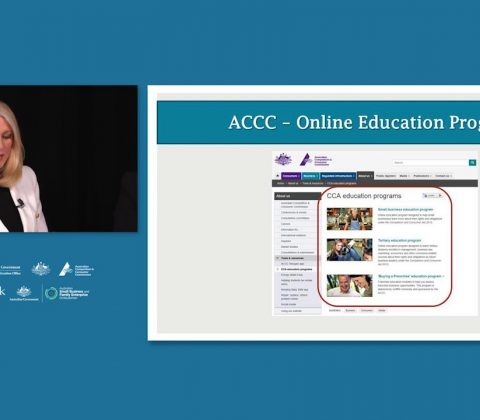
Levelling the Playing Field for Small Business
Levelling the Playing Field for Small Business
Learn how regulators are working to level the playing field for small business in this webinar, with host Tracey Spicer and representatives from the ACCC, ATO, ASIC, Fair Work Ombudsman and the Australian Small Business and Family Enterprise Ombudsman.
Transcript: https://www.accc.gov.au/about-us/tools-resources/social-media/transcripts/levelling-the-playing-field-for-small-business

Small Business Summit Lists Attracting and Retaining Employees Among Greatest Challenges

With a whopping 70 percent of small businesses struggling to find and retain skilled employees, attracting and retaining talent is the leading challenge small business owners face. This was the key takeaway at Goldman Sachs’ 10,000 Small Business Summit: The Big Power of Small Business.
The Challenge of Attracting and Retaining Small Business Talent
The two-day Summit is the largest gathering of small business owners from across the United States. This year’s assembly found the top barrier to small business growth to be failure to attract and retain skilled talent. As a result of failure to recruit and retain skilled workers, small business owners are having to play a significant role in training their employees, which is proving time-consuming and costly.
Training employees means small businesses are using energy, time and money to bring employees up to scratch. By contrast, attracting the right talent and keeping them can save small businesses valuable time, money and effort as no or little training is required.
Offering perks to prospective talent, particularly to millennials, such as flexible working conditions, can be an effective way to attract and retain skilled workers. So can offering business awards and recognition.
In the release about the event, Steven Strongin, Head of the Global Information Research Division at Goldman Sachs, spoke of the findings of the Summit and the need for there to be more relaxed lending requirements for small business owners so they can adequately train staff.
“Our research illuminates the unique dynamics of small business ownership and the common challenges entrepreneurs face across a range of industries,” said Strongin at the Summit.
Strongin commented on both the importance of employee training and easing lending requirements, saying:
“Based on our analysis, in order to invigorate small business growth, lawmakers should consider legislative initiatives that ease lending requirements for small business owners, reward the training small businesses provide their employees and create a central repository of local, state and federal regulations and a common certification standard for meeting requirements across these levels of government.”
Photo via Shutterstock
This article, “Small Business Summit Lists Attracting and Retaining Employees Among Greatest Challenges” was first published on Small Business Trends

Want People to Remember Your Ads? Be Funny, Clutch Says

The most memorable commercials are probably the ones that made you laugh. And a new survey from Clutch says 53 percent of consumers are just as likely to remember an ad if it is funny.
Funny Ads Are More Memorable
The Clutch report looks at what kind of ads consumers prefer across TV, online, social media and print. And the ads with the best response stimulate our desire to eat and laugh in a medium located in virtually all households, TV.
Although TV is still a popular medium for ads, mobile and online advertising are quickly gaining ground — and are much less expensive. For small businesses, this means it is much easier to afford marketing campaigns digitally including on mobile, web and social media. The key is creating ads that appeal to your audience.
Kristen Herhold, Content Developer and Marketer for Clutch, said in the report, “Advertisements appeal to consumers’ emotions and senses… If done correctly, an advertisement can successfully appeal to its target audience, which, in turn, will lead to a purchase and repeat, happy customers.”
The survey was carried out by Clutch with the participation of 1,030 participants across the US. They were asked what makes an ad memorable, as well as the subject matter, and the delivery platform.
Key Findings
When it comes to delivery platforms, 58 percent said they favor TV advertising, and online, social media and print had the preference of 13, 11 and 11 percent of the respondents respectively.
In digital advertising, Facebook was preferred by 36 percent of respondents followed by banners with 21 percent, video interactive with 19 percent and Google searches with 9 percent.
As to the subject matter, respondents said they liked watching on these platforms, food, drink and restaurant ads were the clear winners with around 80 percent. This was followed by fashion, health and beauty with 49 percent, travel and leisure with 48 percent, sports and entertainment with 37 percent and technology with 36 percent.

Regarding the content, humor was key to making the ads memorable and if it is a brand customers trust and are familiar with, 51 percent of respondents said they prefer those advertisements. Meanwhile, 46 percent of respondents said ads interest them if they show a new product of interest, while 44 percent of respondents said being relatable and informative was important in ads.
Images: Amazon, Clutch
This article, “Want People to Remember Your Ads? Be Funny, Clutch Says” was first published on Small Business Trends

41% of Entrepreneurs Will Leave Their Small Business Behind in 5 Years

A staggering 41 percent of entrepreneurs will leave their small business behind in five years. This was the finding of a report by the global financial services firm UBS (NYSE: UBS), looking at business ownership and entrepreneurialism in modern America.
Business Ownership Statistics
The UBS Investor Watch ‘Who’s the Boss?’ report found that nearly 60 percent of wealthy investors would consider starting their own business, yet at the same time, more than 40 percent of existing small business owners are preparing to exit from their business. Of the 41 percent of business owners planning to leave their business in the next five years, half plan to sell their business.
The UBS report highlights how entrepreneurialism is thriving in the United States and there is a growing belief amongst wealthy investors that owning a business is one of the most sought-after and prestigious careers to pursue.
However, the report also shows when it comes to selling a business, small business owners need to be adequately prepared for the sale. Being unprepared for an exit plan can result in a company being sold for an unsatisfactory price.
One way to prepare a business for sale is to have a formal exit strategy in place. The UBS report warns business owners may be underestimating what is required for a successful sale, stating:
“Business owners may be underestimating what’s required for a successful sale. In fact, 75 percent of owners planning to sell believe they could do so in a year or less. However, 58 percent of business owners have never had their business appraised, and 48 percent have no formal exit strategy in place. Most expect a competitor to buy their firm, ahead of employees, large companies or private equity firms.”
The report also highlights how heirs are often reluctant to take over a business. Amongst business owners who are planning to keep the business in the family, 89 percent said their potential heirs show a lack of interest in the family business.
Image: UBS
This article, “41% of Entrepreneurs Will Leave Their Small Business Behind in 5 Years” was first published on Small Business Trends
Recent Comments