Posts By Andre Fisher

QuickBooks Accountant Apps Provision Small Businesses and their Financial Advisors

The new release of QuickBooks Accountant Apps Program from Intuit (NASDAQ: INTU) gives accountants a platform for making top-rated apps available for their customers.
QuickBooks Accountant Apps Program
Accountants can now provision, purchase and manage apps recommended by accounting professionals and fully compatible with the QuickBooks suite of products. According to Intuit, the goal of this program is to make accountants more effective by allowing them to recommend curated solutions for their clients.
In many instances, these clients are small businesses doing their own accounting using applications such as QuickBooks. But these clients also need other apps and finding the right ones can be an exhaustive process.
In a press release, Rich Preece, leader of Intuit’s Accountant Segment, Small Business and Self Employed Group, explained how the program simplifies app selection, connection and management directly within QuickBooks Online Accountant.
“But more importantly, this new program helps accounting professionals be more of a trusted advisor to their small business clients because they are able to recommend and easily implement apps that help their clients be more successful,” Preece added.
The Program
The apps in the program are selected to meet the needs of accounting professionals around the world, so they will vary by region and country. The first apps available in the program are Circulus, Expensify, Float, Method: CRM, Excel Transaction Importer, ServiceM8, SOS Inventory and Tsheets by QuickBooks. These apps will all be accessible in QuickBooks Online Accountant from the Apps Tab.
When accountants are ready to make a purchase on behalf of their clients, they will get preferred pricing. Intuit says accountants will receive one bill for all the apps they provided throughout the month with an itemized report.
Benefit to Accountants
Many CPA firms are small operations working with minimum staff or none at all. And for these firms, managing clients and figuring out which app they are using or make recommendations takes a lot of time and effort. The QuickBooks Accountant Apps Program makes these two data sets available quickly and easily all within a Quickbooks.
Quickbooks users in the US, UK, Canada and Australia can expect the program to roll out sometime in March.
Image: Intuit
This article, “QuickBooks Accountant Apps Provision Small Businesses and their Financial Advisors” was first published on Small Business Trends
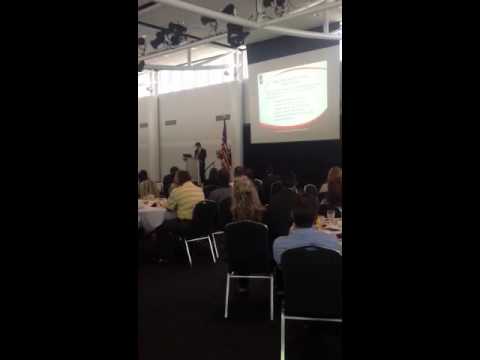
Small Business Resources available through Garland SBDC
Small Business Resources available through Garland SBDC
Mark Langford, Director of the North Texas Small Business Development center, shares information about resources available through the Garland SBDC

10 Reasons to Use Instagram to Promote Your Small Business (INFOGRAPHIC)

With more than 800 million users worldwide, Instagram is one of the most popular social networking sites. It is also a leading platform for small business promotion.
But what makes Instagram popular among small business owners?
Reasons to Use Instagram for Business
Digital company NoHatDigital has compiled a list of the top 10 reasons small businesses should adopt Instagram. Here are some of them.
Put a Face to Your Brand
Instagram is a visual platform to help you form a more personal connection with customers. You can share pictures and videos of your team and happy customers to engage your audience.
A visual feed can reflect your brand’s uniqueness and differentiate your business.
Boost Your Sales
You can use Instagram to update your followers about sales and special promotions. For example, you may run a promotional ad campaign to create awareness and drive more traffic to your website.
If you are launching a new product or service, use Instagram to provide a sneak peek into your latest offerings.
Tell Interesting Stories
Instagram is the perfect place to be creative when marketing your brand. Instagram Stories, in particular, is designed to boost audience engagement.
You can use Instagram Stories to offer discounts and run flash sale. You can also run contests to keep your customers interested.
Build Connections with Like-Minded People
Social media is all about networking. And Instagram is a great place to find like-minded people who share similar interests. You can expand your social network and collaborate with a brand or influencer to reach more people.
Stay Up to Date with Consumer Trends
Another reason why you should be on Instagram is because it can help you make the most of new trends. You can use it to promote causes or simply generate interest by posting holiday-specific content.
Check out the infographic below for more reasons to join Instagram.

Photo via Shutterstock
This article, “10 Reasons to Use Instagram to Promote Your Small Business (INFOGRAPHIC)” was first published on Small Business Trends

Best 10 Free Accounting Software Packages for Small Business

With a million and one things to do each day, accounting doesn’t always take priority on small business owners to do lists. Taking advantage of accounting software can help small businesses manage invoices and payrolls with greater ease and efficiency. And without any costs to fork out, accounting software is even better when it’s free!
Free Accounting Software for Small Business
Take a look at the following ten best free accounting software options for small businesses.
ZipBooks
ZipBooks provides powerful and simple-to-use accounting software designed to help small businesses move to the next level. ZipBooks’ free starter option includes unlimited invoicing, unlimited vendors and customers, unlimited bookkeeping, the ability to connect and manage one bank account, and a business health and invoice quality score.
xTuple PostBoks
xTuple PostBooks is enterprise resource planning (ERP) software, which means that in addition to accounting, small businesses can track sales, integrate inventory and take advantage of a customer management system. The free license program does not provide any specialized support.
SlickPie
SlickPie provide basic expense management for start-ups and small businesses. This easy-to-use expense management software provides everything a small business will need for slick and timely accounting, including straightforward invoicing and detailed reports to help keep their business finances healthy.
Wave
Wave provides completely free accounting that allows small businesses to track expenses, send invoices, get paid and balance their books. Businesses can send professional invoices and track the status of invoices and payments, so they know when to expect money in their bank account. Businesses can also accept credit cards and get paid faster with Wave.
Inv24
Inv24 is a free inventory management and invoicing software, which enables small businesses to automatically organize and invoice their customers. With Inv24, business owners can download PDF versions of invoices or send them by email.
Brightbook
Brightbook is a free online accounting system, designed to help time-strapped and cash-strapped small businesses with no accounting experience run their business easier. Businesses can send professional-looking invoices in any currency, track bills and find out who owes them money in an instant with the easy-to-use Brightbook system.
TurboCash
TurboCash 4 provides free accounting software that is recommended for people earning less than $10 an hour. TurboCash 5 is recommended for small businesses, with cash book, general ledger, stock, debtors, creditors and invoicing features. TurboCash 5 is now available as a Cloud Service. Unlike TurboCash which is free, TurboCash 5 costs $60 a year.
Inveezy
Inveezy is a free invoicing tool for small businesses. Users can customize their invoices with their own logos and use the service to send repeated invoices. Businesses can get paid with PayPal or credit cards with the Inveezy system. Businesses also have the option to send an invoice as a quote as opposed to an actual bill.
GnuCash
GnuCash provides a simple approach to bookkeeping and accounting for small businesses. This free accounting software is available for Android, Linux, Windows, OS X, FreeBSDm GNU and OpenBSD. The software manages invoices, accounts payable and receivable, as well as employee expenses and some payroll features.
CloudBooks
CloudBooks provides businesses with an effective invoicing tool designed to create efficient and timely billing. The CloudBooks’ Free Forever is a free tool for a single client. Businesses can take advantage of CloudBooks’ dedicated team, which can provide an integrated assistance and priority support to meet the needs of their business.
Photo via Shutterstock
This article, “Best 10 Free Accounting Software Packages for Small Business” was first published on Small Business Trends

Want to Hire More Inclusively? 5 Best Practices to Show You How

In the middle of Women’s History Month, with Black History Month and International Women’s Day just behind us, and the 2018 Paralympics just begun, I’ve been thinking a lot about diversity these days. As the #MeToo movement and “Get Out!” illustrate, the same experience can look completely different depending on whether you’re male or female, white or black.
My thoughts about diversity haven’t been entirely happy, however. In fact, the current conversation has reminded me that, no matter how well meaning we are, each of us has unconscious biases. The era in which we grew up, the attitudes our families instilled in us, and the way the rest of the world sees us — all of these factors affect how we see ourselves, and how we see others.
For small business owners, that’s a particular challenge, because we are leaders who need to set examples. Yet if you take a glance around your own business, you may find a lot of people who look a lot like you — or a lot of people who look a lot like each other.
Unconscious Bias in Hiring
Here are a few things I read in the past week that made me think.
Using language that’s stereotypically associated with men or women in job descriptions can discourage candidates of one gender from applying for a job. For example, a study by Cornell University researchers found that ads using words like “ninja,” “rock star,” or “hardcore” tended to deter women from applying. (Although the researchers didn’t study this, I’d assume the same words would dissuade older workers, too.)
Where you place your want ads affects the type of candidates you’ll attract. Late last year, a lawsuit was filed against T-Mobile US, Amazon and Cox for using social media’s ad-targeting capacities to keep job ads from showing up on older workers’ Facebook feeds, SHRM reports.
Traditional ways of recruiting may need to change. The Wall Street Journal reports that a group of plaintiffs in their 40s and 50s have sued PwC, alleging that it discriminates against older workers by recruiting on college campuses and on school affiliated jobsites.
You might be asking for too much in your want ads. Women and minorities are more likely than white men to think they have to meet every requirement listed on a job ad before they can even apply, Cornell research found. Being too specific and detailed about qualifications for a job can reduce the diversity of your applicant pool. You can still ask for what you want, but saying, “Advanced degree preferred” instead of “MBA required” encourages a wider range of people to apply.
Inclusive Hiring Best Practices
Here are some best practices that can help you attract more diverse job candidates.
- Spell it out. State in your ad and on your website that your company welcomes applications from a wide range of job candidates. Explicitly saying your business values inclusion and diversity can go a long way toward making all kinds of people feel welcome.
- Focus on what the job needs to accomplish, not on the qualifications the person should have. What does the person in this role need to get done?
- Use prepared interview questions. Let’s face it: When you’re interviewing a bunch of job candidates, some of them just “click” with you — even if they’re not necessarily the best candidates. Asking everyone the same set of questions helps reduce your bias a little bit, as opposed to letting your interviews turn into conversations.
- If you’re working with outside companies to recruit or provide temporary employees, make sure they know that you are actively seeking diverse candidates. (Make like Academy Award winner Frances McDormand and create your version of an “inclusion rider.”)
- Actively reach out to organizations that help people with disabilities, older people, women, and minorities find jobs.
I don’t pretend to have any solution for the problem of unconscious bias, but all of us can take steps to try to prevent it from limiting our workplaces.
Photo via Shutterstock
This article, “Want to Hire More Inclusively? 5 Best Practices to Show You How” was first published on Small Business Trends

Apply These 5 Secret Techniques to be More Productive in your Business

We all want to be more productive at work.
Want being the key word.
We all want to. It’s just that some days are much harder than others.
But there are some things you can do to be increase your productivity at work – starting right now.
How to Be More Productive at Work
Whether you’re part of a team, or managing it, here are five research-backed secrets on how to increase your productivity.
1. Add an MVP to Your Team
If you’re an NBA fan and the letters MVP are mentioned, you probably think of names like LeBron James and Stephen Curry. And for good reason – they’re amazing players.
But neither one of those MVPs would have won a championship – or a single game – unless they had a team supporting them.
Well, it turns out that great players can have a “spillover” effect on their team members.
They can elevate the games of everyone else on his or her team.
Put simply, an MVP can make everyone better.
In fact, according to “Productivity Spillovers in Team Production: Evidence from Professional Basketball“:
Using possession-level data from games played in the National Basketball Association (NBA), we demonstrate that productivity spillovers play an important role in team production. We find that a standard deviation increase in the spillover effect of one player improves team success by 63% as much as a standard deviation increase in the direct productivity of that player.
What’s it mean?
The magical powers of just one great team member – a unicorn – can positively impact the productivity of rest of your team. The opposite would also be true – a donkey employee can stifle productivity.
And seriously, who would you rather your team emulate – a unicorn or a donkey? So hire wisely!
2. Limit Talk About Politics in the Office
It used to be that politics would only be a huge topic once every four years.
Not anymore.
Regardless of your party affiliation, we can probably all agree that today’s contentious political climate is taking a toll on employees on both sides of the aisle (and everyone caught in the middle).
People are feeling stressed and cynical. They’re having trouble getting work done.
Why? Duh! Stress makes people less productive.
According to a survey by the American Psychological Association, one in four employees were negatively affected by political talk at work during the election season:
Although a majority of working Americans (60 percent) indicated that people at work are generally respectful toward others with differing political views, more than a quarter (26 percent) have witnessed or overheard their coworkers arguing about politics, and about 1 in 10 (11 percent) have gotten into an argument themselves. Overall, more than a quarter of working Americans (27 percent) reported at least one negative outcome as a result of political discussions at work during this election season.
While you can’t stop it entirely, it might help to keep politics to a minimum in the office – and always make sure discussions are done in a respectful manner.
Even if you’re on different “political teams,” you’re all on the same team at work. So do your best to leave the politics at the door and get stuff done.
3. Stand Up!
Could a standing desk make you more productive? Research says yes.
According to research from Texas A&M University:
The researchers examined the productivity differences between two groups of call center employees over the course of six months and found that those with stand-capable workstations–those in which the worker could raise or lower the desk to stand or sit as they wished throughout the day–were about 46 percent more productive than those with traditional, seated desk configurations. Productivity was measured by how many successful calls workers completed per hour at work. Based on work related to this study in a previous publication, workers in the stand-capable desks sat for about 1.6 hours less per day than the seated desk workers.
In addition to increasing productivity, standing desks are also good for health. Workers using standing desks reported less body comfort.
It’s also possible that standing desks can improve cognitive performance, but the research isn’t in on that. Yet.
Healthier employees will be more productive employees. So it may be worth it for your company to make an investment in standing desks.
4. Go Green
Plants aren’t just pretty to look at. Adding plants to your office can boost productivity by 15 percent.
That’s according to University of Exeter research, which found that “green” beats “lean”:
The research showed plants in the office significantly increased workplace satisfaction, self-reported levels of concentration, and perceived air quality.
Analyses into the reasons why plants are beneficial suggests that a green office increases employees’ work engagement by making them more physically, cognitively, and emotionally involved in their work.
If you want a smart and productive office – one that’s more enjoyable, comfortable, and profitable – add some plants.
5. Stop Multitasking
I’ve said it before, and I’ll say it again: multitasking is killing your brain.
The human brain is simply less productive when it tries to focus on more than one task at a time. Our brains weren’t programmed that way.
As research from the University of London explained:
Heavy multitaskers – those who multitask a lot and feel that it boosts their performance – were actually worse at multitasking than those who like to do a single thing at a time. The frequent multitaskers performed worse because they had more trouble organizing their thoughts and filtering out irrelevant information, and they were slower at switching from one task to another.
Oh, but that’s not all in terms of negative effects. Multitasking also lowers your IQ and might even be permanently damaging your brain.
Yikes. You only have one brain. Protect it – and protect your productivity.
So there you have it.
If you’re ready to be more productive at work, now you know where to start.
Republished by permission. Original here.
Photo via Shutterstock
This article, “Apply These 5 Secret Techniques to be More Productive in your Business” was first published on Small Business Trends


Small Business Resources with AARP Massachusetts and the Small Business Administration
Small Business Resources with AARP Massachusetts and the Small Business Administration
Looking to start a small business? You’ve got questions, and we’ve got free resources that can help! In this video, Kara Cohen, Community Outreach Director for AARP Massachusetts, chats with Bob Nelson, Massachusetts District Director for the U.S. Small Business Administration, about free small business resources available through AARP and the SBA, including mentoring, training, loan and financing information, and much more.

Warning: How Safe are You and Your Employees from Your WiFi and Mobile Devices?

Should you need to worry about radiation from your WiFi?
Before I delve straight into answering that question, I guess I need to clear up a few of the basics first like: “what exactly is WiFi radiation?”
So here you go.
WiFi Radiation: What You Should Know
Most WiFi devices emit RF (radio-frequency) radiation (or microwave radiation) 24 hours a day. This radiation is more or less the same type used by microwave ovens for cooking food.
A microwave oven bombards your food container with microwave radiation. This produces molecular friction which heats up the contents of the container. Such a phenomenon is known as the thermal effect or the heating effect.
WiFi devices including the likes of wireless PCs and routers come with transmitters using microwave radiation to convey information back and forth into the air. Bluetooth speakers and headphones rely on the use of RF signals to play music. Even smartwatches use radio frequency to connect to your phone.
So should you worry about any of that? Turns out you should.
RF Radiation From Wifi And Bluetooth Devices: What’s Known And What’s Unknown
Radio frequency signals from Bluetooth, WiFi and cell phones, in general, are considered a nonionizing form of radiation.
Meaning, unlike the ionizing forms of radiation, say, UV light from the sun, or medical tests like x-rays or CT scans, they do not carry a whole lot of energy to alter or break your DNA which is one of the possible ways cancer can occur.
However, some research still comes with the suggestion that nonionizing radiation can have noticeable effects on living beings. Just how serious they are remains the question.
Some of the possible biological effects that have been linked to WiFi are:
- Disruption of glucose metabolism in the brain.
- Increase in blood-brain barrier permeability.
- Disruption of metabolism in the cell.
- Breaks in the DNA chains.
So What Should You Do?
Now don’t get overly concerned about wireless networks because of the biological effects highlighted above.
After all, remember these are only linked to nonionized WiFi waves; there’s no real proof to back them up. And it has also been said exposure from a single router in your business or home may be very small. The risk may be considerably greater in places with dozens of routers and laptops working at the same time.
Anyway, here are a few precautionary steps for you to consider to be on the safe side:
1. Go for an Eco-WiFi Router
Because it offers a safer alternative to a standard WiFi conenction.
The JRS Eco-WiFi router comes with two things:
- A conventional Asus router, and
- An Eco-WiFI software as approved by JRS.
The software gives the router its unique ability to function in low EMF. This short video below can shed more light on the matter.
2. If Possible, Keep your Phone or Tablet Away from your Head or Body
Now, this is particularly true in areas with weak cellular signals. for e.g., when your cell has only one bar. That is because in such situations your phone would increase its functional power to compensate for the lack of coverage.
Carrying your phone in a bag instead of keeping it in your pocket can work wonders. You should also not rest your tablet on your body for an increased period of time.
And then, when you go to bed, consider having your phone away from the place of your sleep. Put it to the “flight” mode, or switch it off entirely.
3. Pay Particular Attention to the Ethernet Cable
Your Ethernet cable’s the one linking your router or modem to your PC.
Most people do not usually give this cable a second thought. If you are one among them, you are making a huge mistake.
The cable can be a source of EF radiation and hence, must be shielded as a precaution. You will find lots of cable categories — labeled 5, 6, 7, etc. — available for purchase. My recommendation would be to go for a Cat6a Snagless Shielded Ethernet cable. It is safer and more effective.
Final Word
Always remember to switch off your WiFi when your device is not in use. The less the exposure, the better. With that, I will sign off finally for the day. Hope you had a great read.
Photo via Shutterstock
This article, “Warning: How Safe are You and Your Employees from Your WiFi and Mobile Devices?” was first published on Small Business Trends
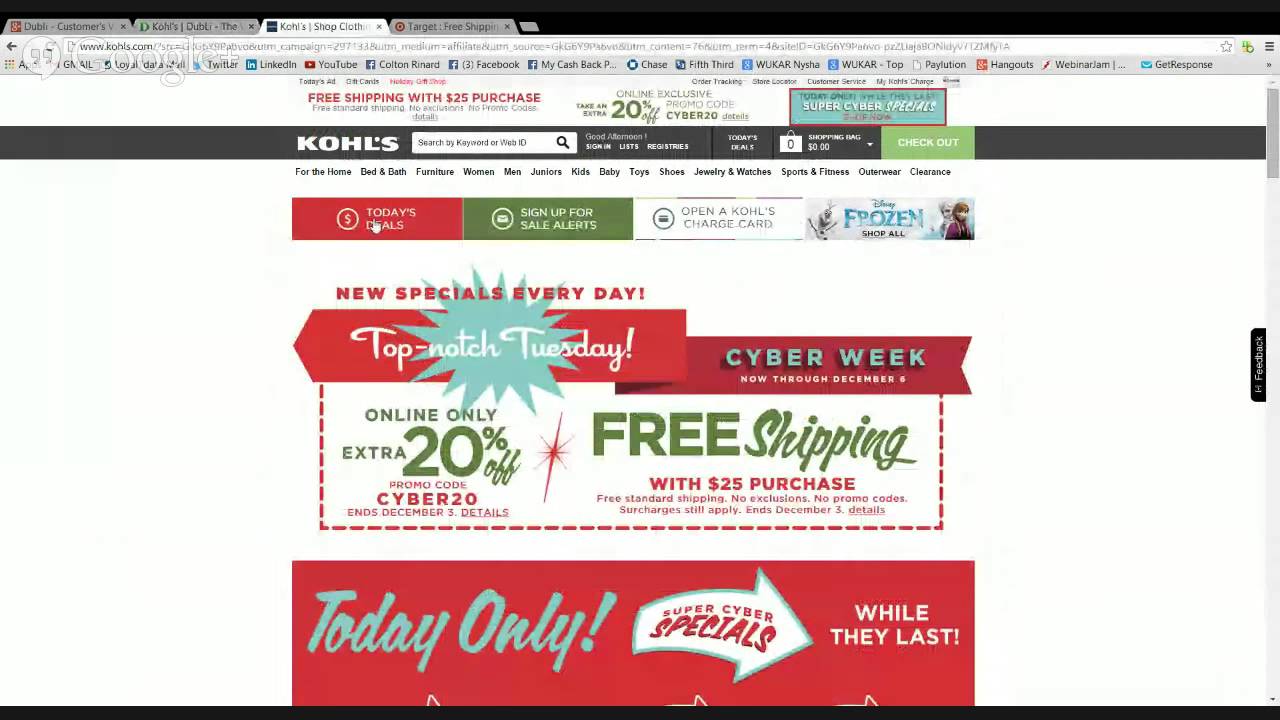
What Do I Need To Do To Start A Small Business
What Do I Need To Do To Start A Small Business
http://wwaga.com
http://myverticalmove.com
What Do I Need To Do To Start A Small Business will be answered in the video above and the description below or for more information on this business model, please contact me at patrick@myverticalmove.com or call me at 832.422.7975?
Ready to get your own ecommerce business up in running today? Visit http://dublinetwork.com/5090890
Come on and join me now and I will teach you in 4 months what took me two years. I can fast track you to the income and success that I am currently enjoying now.
Here is a link toy my YOUTUBE CHANNEL: https://www.youtube.com/channel/UC-rvYc1hc5mTBommW9T8S_g
Understanding What Do I Need To Do To Start A Small Business is one of the first things you need to research. With your global ecommerce business there are things you need to know before starting a home based Business. Set yourself up for success is vital and we will show you how can I start my own business from home like thousands of average people are doing and earning 6 figures per year learning how to set up a small business from home and become successful.
Here is what do you need to start your own business or what do I need to start a small business is probably a better question to ask. Five things that are necessary for you to learn how to start your own small business from home are make sure your company and industry meet these five set of criteria before moving forward in what you need to know to start a business.
Home-Based Businesses
What do Apple Computer, Hershey’s, Mary Kay Cosmetics, Dubli and the Ford Motor Company have in common? These well-known corporations all started out as home-based businesses. In fact, more than half of all U.S. businesses are based out of an owner’s home.
Starting a home-based business has many rewards as well as challenges. This guide provides resources that will help you learn more about working out of your house, starting a home-based business and managing your business within the law.
1. Company must be solid and well-funded
2. Must be positioned in front of a major economic shift or movement
3. Must have a product with mass appeal, something everyone is already doing or using
4. Must have a lucrative compensation plan and pay you what you are worth
5. Must be affordable for the masses to join and get involved
Can you live and work in the same area? Find the answer by asking yourself the following questions: Where in the home will the business be located? What adjustments to living arrangements will be required? What will be the cost of changes? How will your family react? What will the neighbors think?
Home-Based Business….Is it For Me? Is working from home right for you? Learn about several factors you should consider when starting a home-based business. https://www.sba.gov/content/home-based-businesses
Starting a Business in Your Home: Weighing the Pros and Cons. Have you thought about the characteristics and challenges that are most commonly involved in launching home-based businesses? View the pros and cons before you begin a home-based business.
Start a Home-Based Business
If you have decided you are ready to start a home-based business, then you might already have an idea and/or the products you want to market. If not, think about your background, what you are good at, and what experience you have. This exploration can get you on your way to coming up with a sound idea. For additional guidance on how to start your business, use the resources listed below.
Learn more here: http://wwaga.com
Other links to visit: The value proposition for the customer shopping online http://www.youtube.com/watch?v=MfMmj2w5Ssk
How Customer Cashback Works – How Dubli Generates Revenue: http://www.youtube.com/watch?v=NtSiHV8ArtE
Related Articles:
https://www.sba.gov/content/follow-these-steps-starting-business
https://www.sba.gov/content/self-employed-independent-contractors
There are a few other ways how can I start a small business from home and what you need to know before starting a business. A few I have listed here but none are as lucrative or as fast starting as this:
How to start a global ecommerce business: https://www.youtube.com/watch?v=aEYZrYIsJMw
How to start making money fast with Dubli Business: https://www.youtube.com/watch?v=TpDcHVDbeM8
Supporting Sites:
http://smallbusiness.chron.com/5-key-factors-influence-entrepreneurship-18541.html
12 Life Lessons from Warren Buffett to Being a More Compassionate Writer

Best Employee Perks: How to Use Them for Business Success

With the right perks, employers can deliver the work-life balance many of today’s workforce is looking for. A new survey by Clutch reveals one of the most valued of these perks is flexible work hours, which make it possible to achieve this balance. This was the case for more than 2 in 5 or 41 percent of the respondents in the survey.
The report that follows the survey asks, “Why Employee Perks and Company Culture Matter?” And according to Clutch Content Creator and Marketer Elizabeth Ballou, who wrote the report, it is because businesses offering perks will benefit with more productive employees.
This doesn’t only apply to large enterprises. Ballou says small businesses can also provide perks by carefully choosing what to make available and being flexible in the implementation of employee perks.
The goal is to make your employees feel appreciated and valued in your organization. Ballou writes, “Whether those perks come in the form of a free snack bar, the option to work from home, company retreats or reduced-rate evening classes, employee perks show workers that businesses care about their wellbeing.”
The Clutch survey was carried out with 507 participants holding full-time jobs. It was made up of 52 percent female and 48 male respondents split evenly among 18-34, 35-54, and 55 or older age groups. Respondents came from a wide range of companies with anywhere from 1 to 10,000 employees, but the largest group, or 21 percent, came from organizations with between 1 and 10 employees.
And, the Most Important Employee Perk is…
Some of the key findings in the survey revealed 42 percent of respondents didn’t have employee perks and more than half or 53 percent have perks which give them a better quality of life. Of those respondents who receive the perks, 66 percent said they are satisfied with them.

When perks are available, the most common ones are flexible working hours at 32 percent, professional development at 28 percent, fitness, health perks, and food and snacks at 19 percent, and working from home at 14 percent, according to respondents.
As to how these perks benefit employees, 53 percent said it gave them better quality of life and another 49 percent felt valued. In addition 44 percent reported improved physical and mental health, 42 percent reported cost savings and 33 percent reported better bonding with coworkers has benefits of added perks.
Small Businesses
Ballou suggests small businesses can provide perks with health and wellness programs by covering some or all of the cost of gym or other club memberships. Businesses can also take part in the professional development of their employees by offering access to online courses or internal training by senior staff.
Takeaway
Perks improve the working environment of your employees, which in turn make their lives better inside and outside of the workplace. Whether the perk is offering flexible hours or something specific to each of your employees, you can be creative in how you choose to provide them. And you don’t have to be a large company to make it happen.
Photo via Shutterstock
This article, “Best Employee Perks: How to Use Them for Business Success” was first published on Small Business Trends
Recent Comments